




We’ve all been there: standing in front of a full closet, staring at a mountain of clothes, and thinking, “I have absolutely nothing to wear.” Usually, the problem isn’t a lack of clothes—it’s a lack of clarity. Dressing well isn’t about owning the most expensive labels; it’s about context. When you match your outfit to the environment, you don’t just look better; you feel more confident.
Here is your ultimate guide to decoding dress codes and choosing the right look every time.
1. The Professional Arena: Work & Interviews
In a professional setting, your clothes should act as a backdrop to your skills. You want people to notice your ideas, not your neon tie or distracting jewelry.
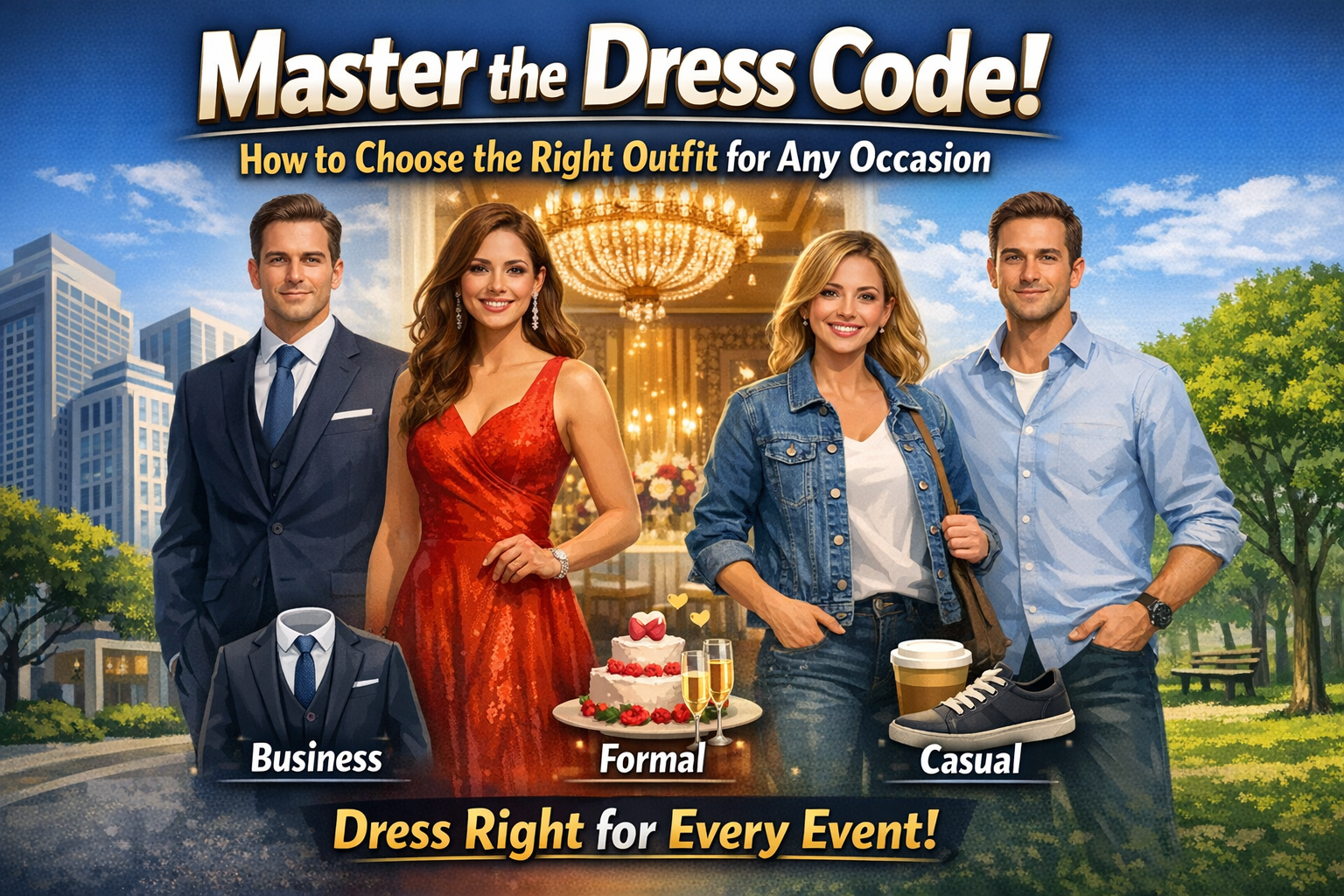
- Business Formal: This is the realm of the matching suit. Stick to neutral colors like navy, charcoal, or black. Ensure your tailoring is sharp—a poorly fitted suit can look like a costume.
- Business Casual: The most misunderstood category. Think “polished but relaxed.” For men, this means chinos and a button-down (no tie needed). For women, try a midi skirt, tailored trousers, or a high-quality knit top.
3. Casual but Conscious: Weekends & Dates
”Casual” does not mean “sloppy.” Even on your day off, a little effort goes a long way.
- The Elevated Casual: Swap your gym sneakers for clean leather trainers or loafers. Trade the oversized hoodie for a well-fitted denim jacket or a bomber.
- First Dates: Aim for the “Best Version of Yourself” look. You want to look like you tried, but not like you’re trying too hard. Dark denim and a crisp shirt/blouse are almost always a winning combo.
4. Three Golden Rules for Any Outfit
Regardless of the event, keep these three principles in mind:
- Fit is King: Even a $2,000 suit looks cheap if the sleeves are too long. A $20 T-shirt looks like a million bucks if it fits your shoulders perfectly.
- Check the Weather: Nothing ruins a great outfit like shivering in a summer dress or sweating through a heavy wool coat. Check the forecast 24 hours in advance.
- When in Doubt, Overdress: It is far less awkward to be the best-dressed person in the room than to be the person who showed up in cargo shorts to a nice dinner.
Final Thoughts
Dressing for the occasion is a form of non-verbal communication. It tells the people around you that you understand where you are and that you respect the event. Next time you’re stuck, ask yourself: What is the “vibe” of the room? The answer is usually right there in your closet.