





Since its inception, the Miss USA pageant has served as a reflection of American ideals, but for a long time, that reflection was incomplete. It wasn’t until 1990 that the pageant truly began to mirror the full spectrum of American beauty. Since then, thirteen extraordinary Black and Black Biracial women have claimed the title, transforming the sash from a symbol of pageantry into a platform for profound social change.
This Black History Month, we celebrate these thirteen icons. They are more than just titleholders; they are veterans, scientists, attorneys, and advocates who proved that a crown is most powerful when used to uplift others.
The Trailblazers: Setting the Stage (1990–1995)
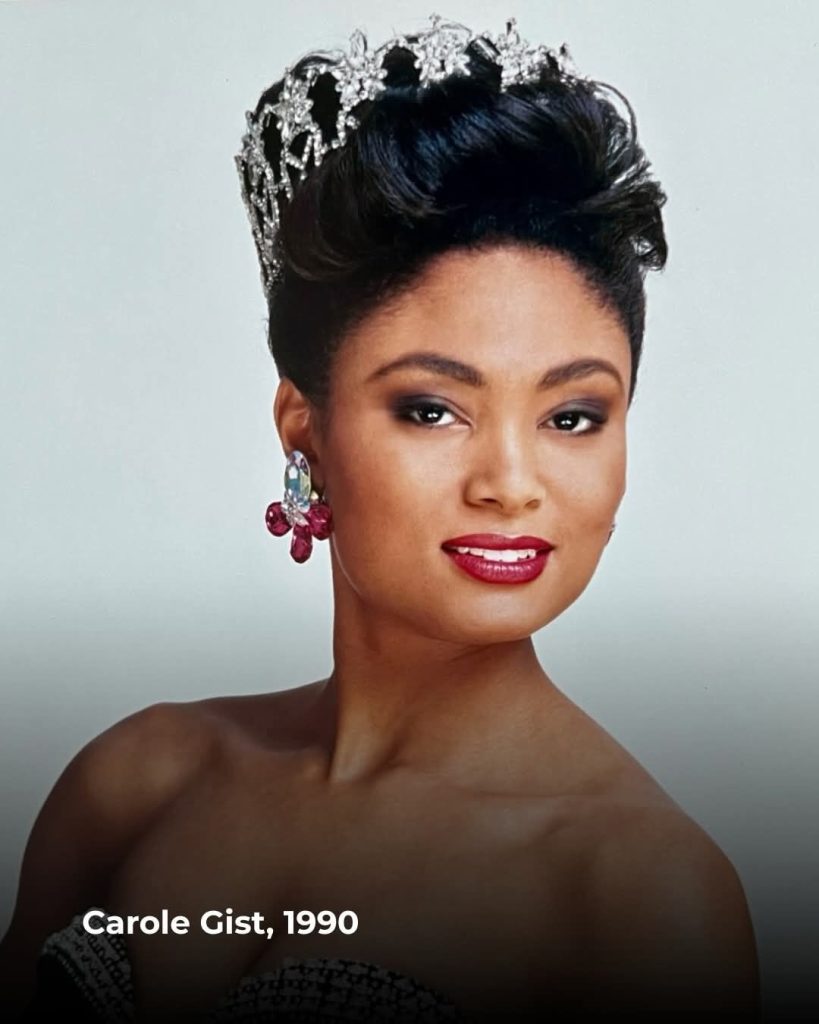
The 1990s marked a seismic shift in the pageant world. It began with Carole Gist, who made history as the first Black woman to win Miss USA. Representing Michigan, Gist’s victory shattered a 38-year ceiling and signaled a new era of inclusivity.
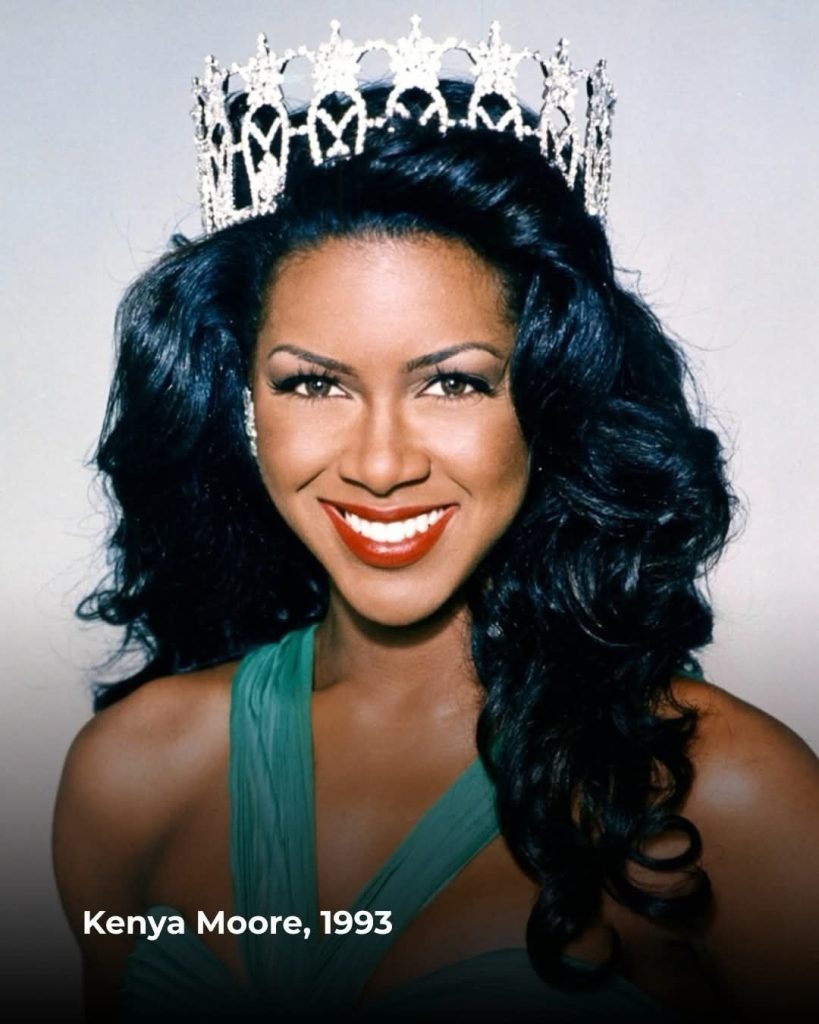
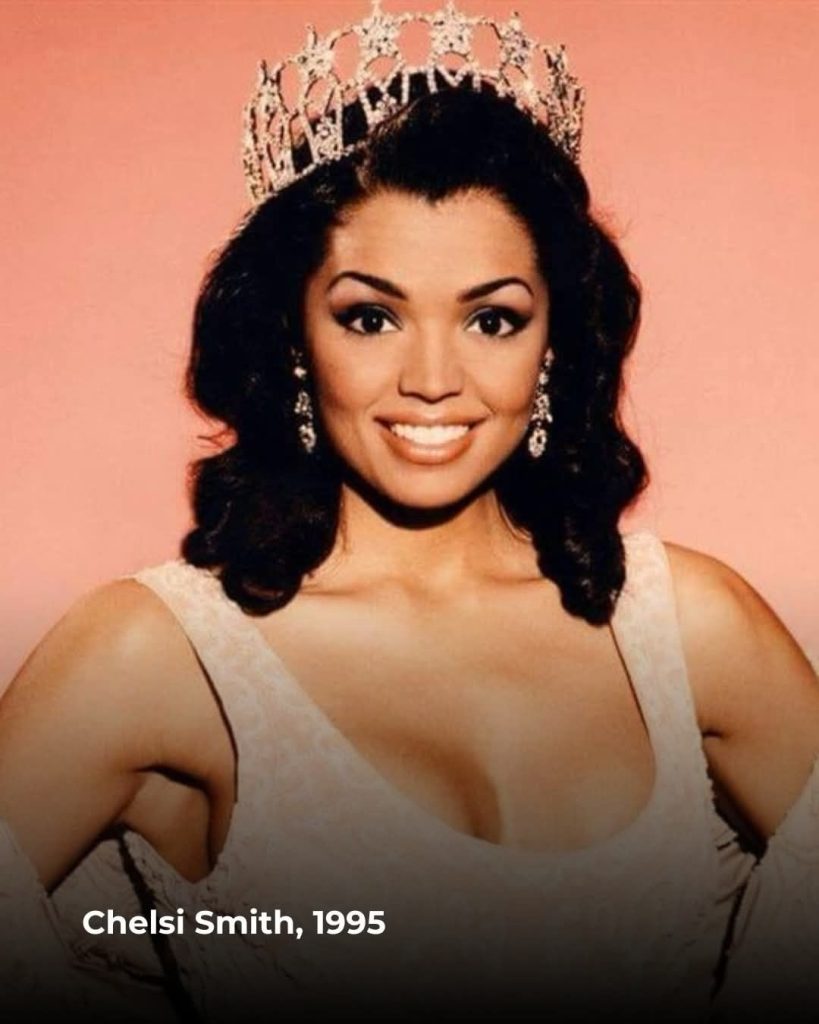
Following closely was Kenya Moore (1993), whose charisma and “Gone with the Wind Fabulous” energy eventually transitioned into a powerhouse career in media and reality television. Then came Chelsi Smith (1995), a biracial trailblazer who went on to win Miss Universe, becoming a global ambassador for multiracial identity and grace.
Redefining the “Pageant Girl” (2000–2010)
As the new millennium dawned, Black titleholders began to dismantle the narrow stereotypes of what a “pageant girl” could be.
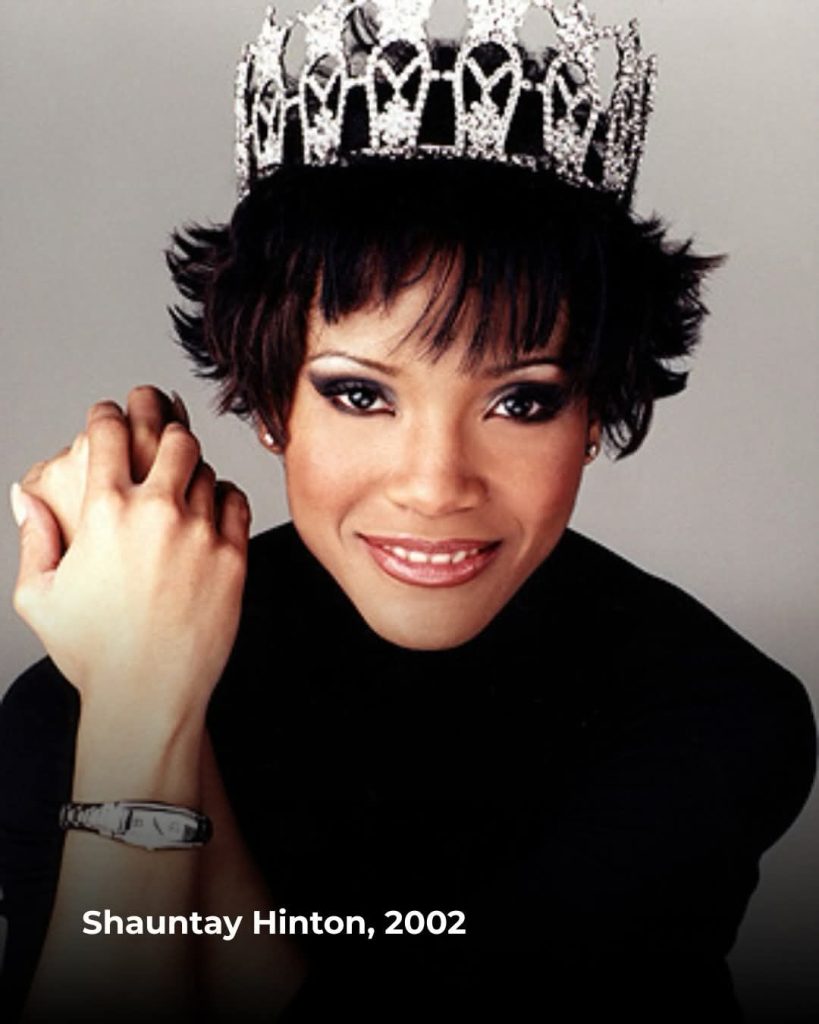
- Shauntay Hinton (2002): A Howard University graduate, Hinton brought a sharp focus on communications and broadcast excellence.
- Crystle Stewart (2008): Stewart’s reign was defined by resilience and entrepreneurship. She later took her leadership skills behind the scenes, becoming the national director of the Miss USA organization for a time, proving she could lead the entire institution.


The Powerhouse Era: STEM, Service, and Law (2016–2019)
The late 2010s saw a remarkable run of Black excellence that emphasized intellectual depth and public service.

Deshauna Barber (2016) changed the game entirely. As a Captain in the U.S. Army Reserve, she marched across the stage with military precision and used her platform to advocate for PTSD awareness and the integration of women in all branches of the military. She wasn’t just a queen; she was a soldier.

Kára McCullough (2017) followed immediately, marking a historic “back-to-back” win for Black women and for the District of Columbia. As a nuclear scientist working for the United States Nuclear Regulatory Commission, McCullough brought STEM to the forefront, encouraging young girls of color to pursue careers in the sciences.

In 2019, Cheslie Kryst redefined the crown for the modern age. A complex civil litigation attorney with an MBA, Cheslie was a tireless advocate for criminal justice reform, working pro bono to reduce the sentences of inmates. Her impact on the organization—and her advocacy for mental health—remains a cornerstone of her enduring legacy.
The Recent Icons (2020–Present)

The 2020s have continued this trend of high-impact leadership. Asya Branch (2020) made history as the first Black woman to represent Mississippi, a win deeply symbolic of the progress made in the American South. She used her reign to speak candidly about prison reform, drawing from her own family’s experiences.

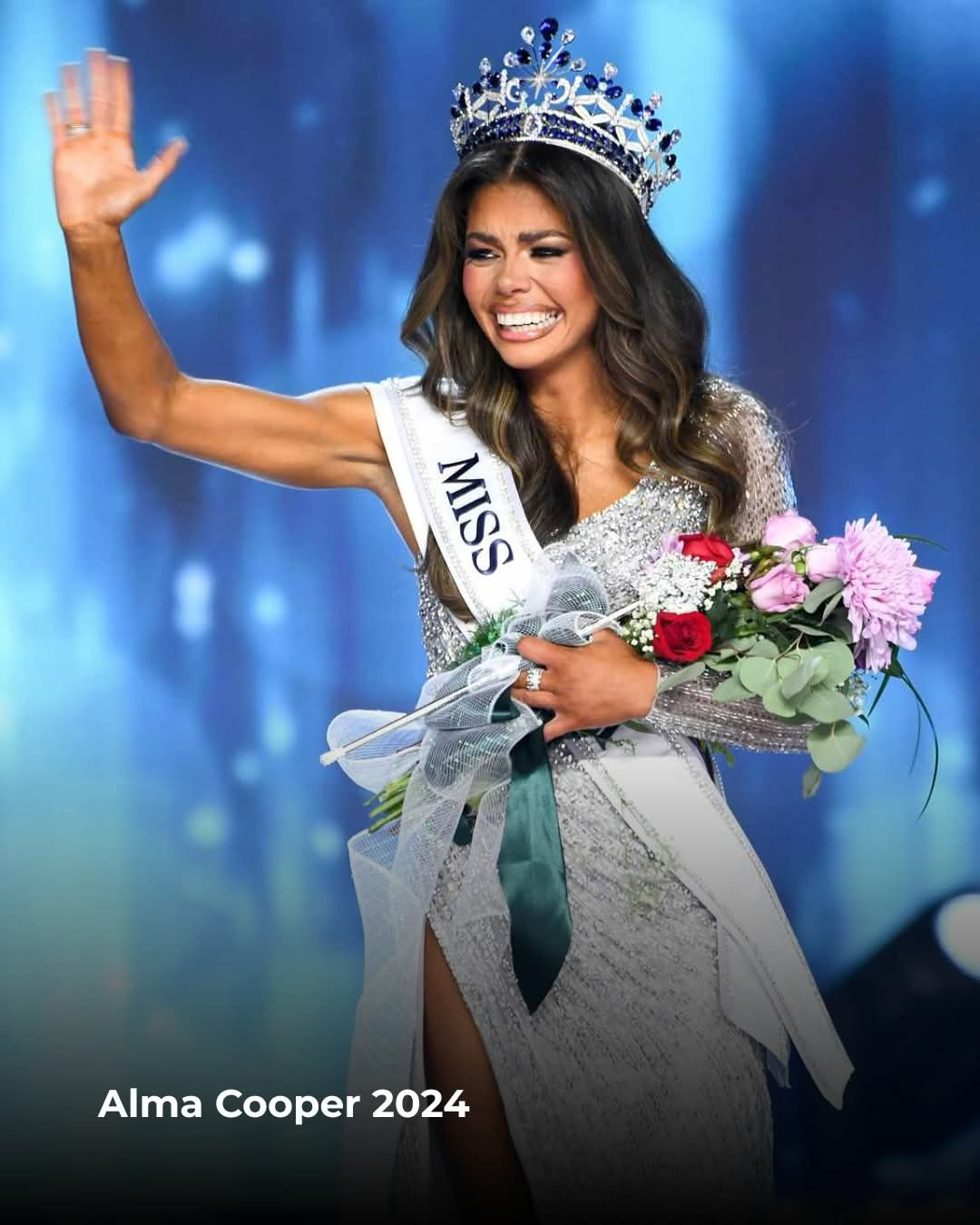
Elle Smith (2021) brought the perspective of a working journalist to the role, while Morgan Romano (2022) and Noelia Voigt (2023) continued to navigate the complexities of modern titleholding with grace. Finally, Alma Cooper (2024), a West Point graduate and data scientist, currently carries the torch, blending military discipline with academic brilliance.

Why Their Legacy Matters
The impact of these thirteen women extends far beyond a one-night television broadcast. They have collectively shifted the narrative of Black womanhood in several key ways
The Ripple Effect: Why Their Legacy Matters
The impact of these thirteen women extends far beyond a one-night television broadcast. They have collectively shifted the narrative of Black womanhood in several key ways:
| Impact Area | Influence |
|---|---|
| Representation | Proved that Black beauty is not a monolith, spanning from natural curls to athletic builds and various skin tones. |
| Professionalism | Shattered stereotypes by transitioning from the stage to high-level careers in law, the military, medicine, and STEM. |
| Advocacy | Brought “taboo” and urgent subjects like PTSD, prison reform, and mental health awareness to the national stage. |
| Leadership | Demonstrated that Black women are not just participants in these institutions, but are capable of directing and redefining them. |
Beyond the Rhinestones
These women didn’t just wear a crown; they expanded what the crown represents. They proved that you can be a soldier and a queen, a scientist and a model, an attorney and an advocate. They showed a generation of young girls that their hair, their skin, their brains, and their voices belong on the world’s most prestigious stages.
As we look back on these thirteen reigns, we see a legacy built on brilliance, resilience, and influence. They didn’t just win a pageant; they helped build a future where every girl knows that she, too, can lead.